
For most people needing a reliable portable charge, the Anker 737 Power Bank (PowerCore 24K) is the best choice. It offers a massive 24,000 mAh capacity, delivers 140W of power, and features a clear digital display. While it’s not the cheapest, its blend of capacity, speed, and durability makes it the top recommendation for anyone serious about keeping their devices powered on the go.
Capacity Matters: Why More mAh Isn’t Always Better
Choosing a power bank often starts with looking at its milliamp-hour (mAh) rating. This number indicates the battery’s total energy storage capacity. A higher mAh count means the power bank can hold more charge and, theoretically, recharge your phone more times. For example, a 20,000 mAh power bank can typically charge a standard smartphone (with a 4,000 mAh battery) about three to four times, accounting for energy loss during transfer.
However, simply picking the highest mAh rating isn’t always the smart move. Larger capacity power banks are heavier and bulkier. A 20,000 mAh unit is significantly larger than a 10,000 mAh model. For daily commutes or a light travel setup, a smaller 10,000 mAh bank might be ideal, offering enough power for one or two full phone charges without adding noticeable weight to your bag. Balance your actual charging needs with portability requirements.
Understanding Milliamp-hours (mAh)
mAh is a unit of electrical charge. It dictates how much energy the battery can supply over time. A 24,000 mAh power bank, like the Anker 737, stores 24,000 milliamp-hours of charge. This translates to roughly 88.8 watt-hours (Wh) (24000 mAh * 3.7V / 1000 = 88.8 Wh). Watt-hours are important for airline travel, as most airlines limit carry-on power banks to 100 Wh (some allow up to 160 Wh with approval). The Anker 737 is well within typical airline limits.
The Weight-to-Capacity Trade-off
A power bank’s weight directly correlates with its battery capacity. More cells mean more weight. A 5,000 mAh power bank might weigh 120-150 grams. A 10,000 mAh model typically falls between 180-250 grams. Step up to 20,000-26,800 mAh, and you’re looking at 350-500 grams or more. Consider your usage. If it’s for a quick top-off at the office, a compact 5,000 mAh bank is fine. For long weekends off-grid, a 20,000 mAh or 24,000 mAh power bank is better, despite the added bulk.
Real-World Charging Cycles
The number of times a power bank can charge your phone is never exactly its mAh divided by your phone’s battery mAh. This is due to energy conversion losses, heat generation, and voltage differences. Efficiency typically ranges from 80-90%. A 20,000 mAh power bank will deliver closer to 16,000-18,000 mAh of usable power. Factor this in when estimating how many charges you’ll get for your specific device, which likely has a battery between 3,500 and 5,000 mAh.
Essential Features for Fast, Safe Charging
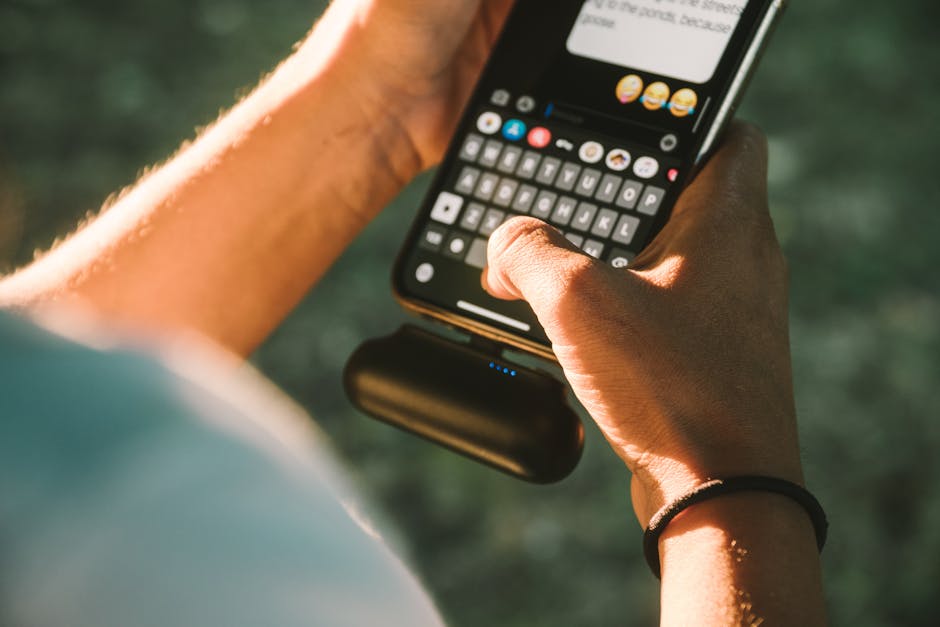
Modern power banks offer more than just raw capacity. Key features dictate how quickly and safely your devices charge. Ignoring these can lead to slow charging speeds or even damage.
- USB Power Delivery (USB-PD): This is the most crucial feature for fast charging. USB-PD allows for higher power output (up to 100W, sometimes even 240W on newer standards) over a USB-C connection. It dynamically negotiates the best voltage and current between the power bank and your device. If your phone supports USB-PD, ensure your power bank does too.
- Quick Charge (QC): Developed by Qualcomm, Quick Charge is another fast-charging standard, primarily for devices with Qualcomm chipsets. While USB-PD is becoming more universal, many Android phones still benefit from QC. Some power banks support both, offering broader compatibility.
- Multiple Ports: Look for at least one USB-C port with PD capabilities and one or more USB-A ports. USB-A ports are useful for older accessories or devices that don’t need fast charging. Having multiple ports lets you charge several devices simultaneously, though total output wattage will be shared.
- Passthrough Charging: This feature allows the power bank to charge itself while simultaneously charging a connected device. It’s incredibly convenient for overnight charging, letting you power up both your phone and the power bank from a single wall outlet.
- Safety Protections: Quality power banks include safeguards against overcharging, over-discharging, short circuits, and overheating. These are vital for both the longevity of your devices and the power bank itself. Reputable brands like Anker, Baseus, and Nitecore build these protections into their products.
Power Delivery (USB-PD) Explained
USB-PD is the standard you want for fast charging virtually any modern device, from smartphones and tablets to laptops. It can deliver power at various voltages (5V, 9V, 12V, 15V, 20V) and currents, adjusting to what the connected device needs. For instance, an iPhone 15 Pro can charge from 0% to 50% in about 30 minutes with a 20W USB-PD power bank. Many laptops now charge via USB-C PD, requiring 45W or 65W. High-end power banks like the Anker 737 offer up to 140W, making them suitable for powerful laptops.
Port Types: USB-A vs. USB-C
USB-C is the future. It’s reversible, supports higher power, and carries data. All new devices are moving to USB-C. A good power bank in 2026 should have at least one USB-C port that supports Power Delivery for output and often for input (recharging the power bank). USB-A ports still have their place for older devices, smartwatches, or accessories like headphones that charge at lower speeds. Ensure the USB-A ports also support decent output, preferably up to 18W, for faster charging of compatible devices.
Top Power Banks for Most Users (2026 Edition)
Finding the right power bank means balancing capacity, charging speed, and portability. Here are our top recommendations for 2026, covering various needs and budgets. We’ve focused on models with strong USB-PD capabilities and reliable performance.
| Model | Capacity | Max Output (W) | Key Feature | Price (Approx.) |
|---|---|---|---|---|
| Anker 737 Power Bank (PowerCore 24K) | 24,000 mAh | 140W | Digital display, two-way PD | $150 |
| Baseus 65W 20000mAh Power Bank | 20,000 mAh | 65W | Excellent value, compact for capacity | $60 |
| Nitecore NB10000 Gen 2 | 10,000 mAh | 20W | Ultra-lightweight (carbon fiber) | $70 |
| Anker MagGo Power Bank (10K) | 10,000 mAh | 20W wired, 7.5W wireless | Magnetic wireless charging | $90 |
Anker 737 PowerCore 24K: The Premium Pick
The Anker 737 PowerCore 24K is unmatched for sheer power and features. Its 24,000 mAh capacity can fully charge most smartphones five times or power a demanding laptop for several hours. The standout feature is its 140W max output, which means it can fast-charge even high-power devices like the MacBook Pro 16-inch. The intelligent digital display shows real-time output/input wattage and remaining battery life, a genuinely useful addition. It has two USB-C ports (140W max) and one USB-A port (18W max). Recharging the power bank itself is also incredibly fast, taking just over an hour with a 140W PD wall charger. This is the one to get if budget is not a primary concern and you need maximum performance.
Baseus 65W 20000mAh Power Bank: Best Value
For those needing strong performance without the Anker 737’s premium price, the Baseus 65W 20000mAh Power Bank is an exceptional value. It delivers a robust 65W via its USB-C port, which is enough to fast-charge most laptops, tablets, and all modern smartphones. The 20,000 mAh capacity is ample for multiple phone charges or a full laptop charge. It also features two USB-A ports and a digital display. Its slightly more compact form factor compared to other 20,000 mAh banks makes it a practical choice for daily carry. Baseus consistently offers competitive performance for its price point, making this an easy recommendation for most users.
Nitecore NB10000 Gen 2: The Ultralight Option
If weight is your absolute priority, especially for hiking, backpacking, or minimalist travel, the Nitecore NB10000 Gen 2 is the clear winner. Weighing just 150 grams (about half the weight of a typical 10,000 mAh power bank), it achieves this with a carbon fiber body and advanced battery technology. Despite its low weight, it still packs a 10,000 mAh capacity, enough for two full smartphone charges. It offers 20W USB-C PD output and 12W USB-A output, sufficient for most phones and smaller devices. It sacrifices some charging speed and capacity for unparalleled portability, a trade-off many adventurers will appreciate.
Avoid These Common Power Bank Mistakes

Many users make simple errors that can lead to slower charging, damaged devices, or a shorter lifespan for their power bank. Steer clear of these pitfalls to get the most out of your portable charger.
- Buying Generic, Uncertified Brands: Cheap power banks from unknown brands often lack proper safety certifications (like CE, FCC, RoHS). They might use low-quality cells, deliver inconsistent power, or have inadequate protection circuits. This risks overheating, overcharging, or even fire. Stick to reputable brands with a track record of safety and performance.
- Ignoring Charging Protocols: Simply plugging in a USB cable doesn’t guarantee fast charging. Your power bank, cable, and device must all support the same fast-charging protocol (e.g., USB-PD, Quick Charge). Using a standard cable with a PD-enabled bank won’t unlock its full speed. Always use a USB-C to USB-C cable for PD, and ensure it’s rated for the wattage your power bank provides.
- Not Checking Input Wattage: How fast does your power bank recharge? Many users overlook this. A 20,000 mAh power bank might take 10+ hours to recharge fully if its input only supports 10W. Look for power banks that support fast input charging via USB-C PD (e.g., 30W, 45W, or even 100W+). This dramatically reduces downtime.
- Over-Discharging or Overcharging: While modern power banks have protection circuits, consistently draining them to 0% or leaving them plugged in for days after fully charged can degrade battery health over time. Aim to recharge when they’re around 20-30% and disconnect once full.
The Dangers of Uncertified Chargers
Uncertified chargers pose real risks. They often fail to meet safety standards, leading to problems like inconsistent voltage delivery, which can harm your phone’s battery over time. More critically, they lack robust temperature control and short-circuit protection, increasing the risk of overheating, swelling, or even combustion. Lithium-ion batteries, when mishandled or poorly manufactured, are dangerous. Invest in a power bank from a known brand with clear safety markings.
Why Passthrough Charging is Key
Passthrough charging allows your power bank to charge itself from a wall outlet while simultaneously charging a device connected to it. This is a when you have limited outlets, like in a hotel room or at an airport. You don’t have to wait for the power bank to fully charge before you can start charging your phone. It streamlines your charging routine and ensures both your power bank and device are ready when you need them.
Wireless Charging Power Banks: Worth the Hype?
Wireless charging in power banks promises convenience. No cables, just place your phone on top. For some, it’s a must-have; for others, an unnecessary extra. The truth lies in specific use cases and understanding its limitations.
Is Wireless Charging Slower Than Wired?
Yes, generally, wireless charging is slower than wired charging. Most wireless power banks output 5W, 7.5W (for iPhones), or 10W, 15W (for Android phones). Compare this to a wired USB-C PD connection that can deliver 20W, 45W, or even 100W. A 7.5W wireless charge for an iPhone 15 Pro will take significantly longer to reach 50% than a 20W wired charge. The convenience comes at the cost of speed and some energy efficiency, as energy is lost as heat during wireless transfer.
When Does Magnetic Charging Make Sense?
Magnetic wireless charging, popularized by Apple’s MagSafe, significantly improves the wireless experience. Power banks like the Anker MagGo Power Bank (10K) securely attach to the back of compatible iPhones. This solves the alignment issue common with standard Qi wireless charging pads, ensuring a consistent charge. It also allows you to comfortably use your phone while it’s charging wirelessly, a major advantage over standard Qi power banks where the phone often slides off. Magnetic charging makes sense for iPhone users prioritizing convenience and who want a stable, attachment-free charging experience without carrying extra cables.
Which Brands Offer Reliable Wireless Options?
Anker is a leader in reliable wireless power banks, particularly with its MagGo series. Their products consistently offer strong magnetic attachment and efficient wireless charging for iPhones. Other reputable brands like Mophie and Belkin also offer quality wireless power banks, often with integrated stands or unique designs. When considering a wireless power bank, check for strong magnetic attachment if you have a compatible phone, and look for at least 7.5W (for iPhones) or 15W (for Android) wireless output to avoid agonizingly slow charging speeds.
The Single Best Power Bank for Travel
For international travel, the Nitecore NB10000 Gen 2 is the undisputed champion. Its featherlight 150-gram weight and slim profile make it disappear in any bag. With 10,000 mAh capacity and 20W PD, it handles essential phone charges while staying within all airline carry-on limits and minimizing bulk for global adventures.
