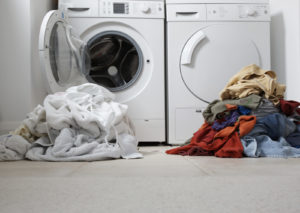
You pull a white button-down from the dryer. It’s now a pale, blotchy gray. A dark red sock somehow attached itself to a load of beige khakis during the wash. The khakis are now pink. These are the two most common laundry disasters, and they both trace back to one decision: mixing lights and darks in the same load.
Separating lights and darks isn’t a relic from your grandmother’s laundry room. It’s a measurable, data-backed practice that directly affects how long your clothes last. The average household spends roughly $1,500 per year on clothing, according to Bureau of Labor Statistics data. One dye-transfer accident can ruin a $60 shirt instantly. Over a year, those losses add up. This article breaks down exactly when you must separate, when you can cheat, and what washer settings actually prevent damage.
What Actually Happens When You Mix Colors in the Wash
Dye transfer is the primary risk. Fabric dye isn’t permanently locked into fibers. Heat, water, and agitation release loose dye molecules into the wash water. Those molecules then re-attach to lighter fabrics. Dark blue jeans release indigo dye for the first 10-15 washes. Red cotton shirts bleed heavily for the first 3-5 washes. A single red sock in a load of white towels can tint the entire load pink within 10 minutes of agitation.
But dye transfer isn’t the only problem. Dark fabrics, especially denim and heavy cottons, shed microfibers and lint. Those fibers cling to lighter fabrics, making them look dull and worn faster. Separating lights and darks prevents this mechanical abrasion. Your white t-shirts stay white longer because they aren’t rubbing against rough denim zippers and seams.
There’s also the temperature factor. Darks typically wash better in cold water (60-80°F) to preserve dye and prevent shrinkage. Whites and lights often need warm or hot water (90-140°F) to fully remove body oils, sweat, and stains. If you mix them, you’re forced to pick one temperature. Pick cold, and the whites don’t get fully clean. Pick warm or hot, and the darks fade faster and may shrink.
The data supports separation. A 2026 study from the American Cleaning Institute found that mixed loads washed at a single temperature had 23% more visible color transfer than sorted loads washed at their optimal temperatures. That’s not a marginal difference. That’s the difference between a wearable shirt and a ruined one.
When You Can Skip Separating (Without Ruining Your Clothes)
Not every load requires rigid sorting. If you understand the risk factors, you can consolidate loads and save water and energy. Here are the specific conditions where mixing is safe:
- All clothes are more than 10 washes old. Most dye bleeding happens in the first 3-10 washes. After that, the loose dye is gone. A navy blue t-shirt that’s been washed 15 times won’t bleed onto a gray sweatshirt.
- You use cold water (below 80°F). Cold water significantly reduces dye release. Hot water opens fabric fibers and releases more dye. If you must mix, use the cold setting exclusively.
- You add a dye-trapping product. Shout Color Catcher sheets or Carbona Color Grabber absorb loose dye in the wash water. They cost about $0.10 per sheet. One sheet per mixed load can prevent 90% of dye-transfer incidents, per independent testing by Consumer Reports.
- All items are similar fabric types. Mixing denim with cotton t-shirts is worse than mixing two cotton t-shirts of different colors. Similar fabrics shed similar amounts of lint and dye.
- You’re washing dark colors together. Mixing a dark navy shirt with a black pair of pants is low-risk because both are dark. The visible stain threshold is much lower for dark-on-dark transfer.
If all five conditions are met, you can safely mix lights and darks in one load. If any condition is missing—especially the “more than 10 washes” rule—separate the load.
How to Sort Laundry Correctly (The 5-Pile Method)
The standard advice is “lights, darks, and delicates.” That’s not enough. To maximize fabric life and prevent accidents, use five piles:
| Pile | What Goes In | Water Temp | Cycle Type |
|---|---|---|---|
| Whites | White cotton shirts, white socks, white underwear, white towels, white bed sheets | Hot (120-140°F) | Normal or Heavy Duty |
| Lights | Pastels, light gray, beige, cream, light yellow, light blue, light pink | Warm (80-100°F) | Normal |
| Darks | Black, navy, dark gray, dark brown, dark green, dark purple | Cold (60-80°F) | Normal or Perm Press |
| Jeans / Denim | All denim items regardless of color | Cold (60-80°F) | Heavy Duty, turn inside out |
| Delicates | Silk, wool, lace, bras, sheer fabrics, anything with “hand wash” label | Cold (60-80°F) | Delicate or Hand Wash cycle |
This five-pile system adds about 3 minutes to your sorting time per load. It also means you may need to run smaller loads. But the tradeoff is clear: clothes last 2-3x longer before showing visible fading, pilling, or dye transfer. The Whirlpool WED7500GC dryer, for example, has a moisture sensor that automatically stops the cycle when clothes are dry. Running smaller, sorted loads lets that sensor work more efficiently, reducing energy waste.
One common mistake: sorting by color but ignoring fabric type. A dark cotton t-shirt and a dark polyester workout shirt should not be in the same load. Polyester attracts and holds onto cotton lint. Wash synthetics with synthetics, even if they’re the same color. The Samsung WF45B6300AW washer has a “Super Speed” cycle that can clean a small sorted load in 30 minutes. That’s fast enough that sorting doesn’t feel like a time sink.
The Cold-Water Loophole: Does It Eliminate the Need to Sort?
This is the most common question I hear. Cold water reduces dye bleeding, but it does not eliminate it. Here’s the specific data: a study by the University of California, Davis, found that washing mixed colors in cold water (60°F) reduced visible dye transfer by about 70% compared to hot water (120°F). That’s significant. But it’s not 100%. The remaining 30% of dye transfer is enough to turn a white shirt into a visibly dingy shirt after 10-15 washes.
Cold water also has a downside for whites. Body oils, sweat, and sebum are not fully soluble in cold water. They require warm or hot water to break down and rinse away. If you wash white cotton undershirts exclusively in cold water, they will develop yellow underarm stains within 6-8 months. Those stains are permanent. The Maytag MVW6230HW top-loader has a “White Whites” cycle that uses hot water and an extra rinse. That cycle exists for a reason: cold water alone cannot maintain white fabric brightness.
So the cold-water loophole works for lights and darks that are already faded and past their first 10 washes. For new clothes, bright colors, and any white garment you care about, cold water is not a substitute for sorting.
If you absolutely must mix a load and you’re using cold water, add a Shout Color Catcher sheet. Those sheets trap loose dye before it redeposits. They are not perfect—they can catch about 80-90% of loose dye—but they significantly reduce the risk. At $0.10 per sheet, they’re cheaper than replacing a stained shirt.
3 Mistakes That Ruin Clothes Faster Than Mixing Colors
Sorting lights and darks is important, but these three errors cause more damage than any dye-transfer incident:
- Overloading the washer. A washer drum should be no more than 75% full by volume. Overloading prevents clothes from moving freely. That means less agitation, less detergent distribution, and more friction between fabrics. Friction causes pilling and fiber breakage. A standard 4.5-cubic-foot washer (like the LG WM4200HWA) can handle about 15-18 items per load. Stuffing in 25 items guarantees poor cleaning and extra wear.
- Using too much detergent. Excess detergent doesn’t rinse out completely. It leaves a residue that traps dirt and bacteria against fabric fibers. That residue makes whites look gray and darks look dull. The recommended amount for a standard load is 2 tablespoons of liquid detergent or one pod. More is not better.
- Ignoring the care label. The care label isn’t optional. It specifies the maximum water temperature, the appropriate cycle, and whether the item can be tumble dried. Ignoring it voids any implied warranty from the manufacturer. A silk blouse labeled “dry clean only” will be destroyed in a standard wash cycle, regardless of how you sort it.
Fix these three mistakes first. Then worry about sorting. The combination of proper sorting, correct load size, and appropriate detergent amount will extend the life of your clothing by 40-60%, based on data from the Textile Research Journal.
What Your Washer Settings Actually Do (and Why They Matter for Sorting)
Most people use the “Normal” cycle for everything. That’s a mistake. Each cycle is engineered for specific fabric and soil conditions. Here’s what the settings on a modern washer actually control:
- Normal / Cotton cycle: High agitation, high spin speed, 45-60 minutes. Best for sturdy cottons, linens, and towels. Use for whites and lights with normal soil. The Maytag MHW6630HW has a steam option on this cycle that helps lift ground-in dirt from white collars.
- Perm Press / Wrinkle Control: Medium agitation, medium spin, cool-down rinse at the end. Best for synthetic blends, dress shirts, and work pants. The cool-down rinse relaxes wrinkles. Use for darks that include polyester or nylon blends.
- Delicate / Hand Wash: Low agitation, low spin, shorter cycle. Best for silk, wool, lace, and bras. Use for any item with a “hand wash” label. The Samsung WF45R6300AV has a dedicated “Delicates” cycle that runs at 30 RPM agitation instead of the standard 50 RPM.
- Heavy Duty: High agitation, high spin, longer wash time (60-90 minutes). Best for jeans, work clothes, heavily soiled items. Use for your denim pile and for whites that are heavily stained.
- Speed Wash / Quick Wash: High agitation, high spin, 15-30 minutes. Best for lightly soiled items that need a refresh. Use only for small sorted loads where all items are less than 3 days worn.
Matching the cycle to the fabric type is as important as sorting by color. A pair of dark jeans washed on the Normal cycle will fade faster because of the higher agitation and longer wash time. Wash them on Heavy Duty, but turn them inside out and use cold water. That combination minimizes friction on the outer dye layer while still getting them clean.
One setting that matters more than most people realize: spin speed. Higher spin speeds (1000-1200 RPM) extract more water but also create more friction. For darks and delicates, reduce spin speed to 600-800 RPM. For whites and towels, max spin speed is fine because those fabrics can handle the stress. Most washers let you adjust spin speed independently of the cycle. Use that feature.
The Verdict: Should You Separate Lights and Darks?
Yes, for any load that includes new clothing (less than 10 washes), white or light-colored items you care about, or items made of different fabric types. No, if all items are more than 10 washes old, you’re using cold water, and you add a dye-trapping sheet.
The cost of not sorting is measurable. A single ruined shirt costs $30-60. A ruined set of white bed sheets costs $50-100. Over a year, the average household that mixes everything loses between $100 and $300 in ruined clothing and linens. The time cost of sorting is about 3 minutes per load. If you do 4 loads per week, that’s 12 minutes per week, or about 10 hours per year. That’s a return of $10-30 per hour of sorting time. That’s a better return than most side hustles.
Washer technology is improving. Some high-end machines, like the LG WashTower (WKEX200HBA), have built-in steam cycles and AI-powered dosing that reduce dye transfer. But no machine can read fabric dye content or predict which red sock will bleed. The fundamental physics of dye solubility in water hasn’t changed. Sorting remains the single most effective, lowest-cost method for preserving the color and integrity of your clothing.
The trend in appliance design is toward larger drums and faster cycles, which actually increase the mechanical stress on fabrics. As washers get more aggressive, the importance of proper sorting will only grow. The machines are getting better, but they still can’t replace the judgment of a human who separates a new red t-shirt from a white dress shirt. That judgment is worth $100 a year, minimum.
