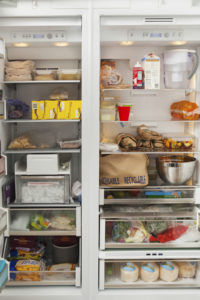
Here’s a number that stops most people cold: the average American household throws away roughly $1,500 worth of frozen food every year — not because it spoiled, but because they couldn’t find it, forgot it existed, or lost track of how long it had been buried in the ice. That’s not a storage problem. That’s an organization problem.
Most advice on freezer organization reads like a Pinterest fantasy: matching bins, labeled everything, Instagram-ready stacks of frozen vegetables. That approach fails for one reason — it ignores how people actually use their freezer. You shove things in after a grocery run at 9 PM. You grab a bag of peas while holding a crying toddler. You don’t have time to alphabetize frozen burritos.
This article skips the aesthetic fluff and goes straight to what works: systems that reduce waste, cut grocery costs, and make your freezer a functional tool instead of a black hole.
Why Most Freezer Organization Systems Fail — The Data
A 2026 study from the University of Michigan found that households with a clear freezer organization system reduced food waste by 34% compared to those without one. But here’s the catch: the same study showed that over 60% of participants abandoned their system within three months.
Why? Because the systems were too rigid. They required constant maintenance, weird bins that didn’t fit standard frozen food boxes, and labels that fell off after a month in sub-zero temps.
The failure modes are consistent:
- Over-organizing upfront — buying 20 identical bins and trying to force everything into them, only to discover that a family-size lasagna doesn’t fit.
- Labeling without a master list — writing “chicken — Jan 15” on a package but never writing it down anywhere else. Three months later, you have no idea which chicken that was.
- Ignoring airflow — packing the freezer so tight that cold air can’t circulate. This causes temperature swings, freezer burn, and higher electricity bills as the compressor works overtime.
A better approach starts with understanding your actual freezer type. Chest freezers and upright freezers behave completely differently. Chest freezers hold cold better when full, but finding anything requires digging. Upright freezers are easier to access but lose cold air every time you open the door.
Zone-Based Freezer Organization — The Only System You Need
Forget bins by food type. Forget color-coding. The most durable system is zone-based organization — you divide the freezer into physical zones based on how often you access items.
Zone 1: The Front Line (High-Frequency Items)
This is the most accessible space — the front of the top shelf in an upright, or the top layer in a chest freezer. This zone gets the items you use at least once a week: frozen vegetables, ice cream, frozen pizza, breakfast items.
Keep this zone loose. Do not over-pack it. You should be able to grab something in under 5 seconds.
Zone 2: The Middle Ground (Medium-Frequency Items)
This holds items you use every 2–4 weeks: frozen meats, fish, pre-prepped meals, backup bread. In an upright freezer, this is the middle shelf. In a chest freezer, it’s the layer just below the top.
Use open-top bins here — the kind with no lid. Lids create a barrier that makes people forget what’s underneath. A 2026 study from the Journal of Consumer Behaviour found that visible food is 40% more likely to be used before its quality declines.
Zone 3: The Deep Freeze (Long-Term Storage)
The bottom shelf of an upright, or the bottom layer of a chest freezer. This is for items you store for 3 months or longer: bulk meat purchases, holiday leftovers, seasonal produce.
Every item in this zone must have a date and a label. Use a permanent marker directly on the packaging — labels fall off. Write the date in large numbers. And here’s the key: maintain a paper inventory list taped to the freezer door or inside the lid. Update it every time you add or remove something from this zone.
| Zone | Access Frequency | Examples | Storage Method |
|---|---|---|---|
| Zone 1 — Front Line | Weekly | Frozen veggies, ice cream, pizza | Loose, no bins |
| Zone 2 — Middle Ground | Every 2–4 weeks | Meats, fish, prepped meals | Open-top bins |
| Zone 3 — Deep Freeze | 3+ months | Bulk meat, holiday leftovers | Paper inventory list + dated packages |
This system works because it matches human behavior. You don’t have to reorganize every week. You just maintain the zones.
The First-In, First-Out (FIFO) Method — Applied to Freezers
Restaurants use FIFO for a reason: it prevents older stock from getting buried behind newer stock. The same principle applies at home, but most people do the opposite — they toss new groceries on top of old ones, creating a time capsule of forgotten food.
FIFO in a freezer means two things:
- New items go to the back or bottom. Old items stay toward the front or top.
- You rotate when you restock. Every time you buy frozen food, spend 30 seconds pulling older items forward before putting new ones behind them.
That 30 seconds saves you from discovering a freezer-burned pack of chicken from 2026 that you swore you’d use “next week.”
One practical tip: store similar items together in the same zone. All frozen vegetables in one area, all meats in another. This makes rotation easier because you’re not hunting through five different spots to find the oldest bag of peas.
Why Chest Freezers Are Not a Good Fit for Most Households
Chest freezers get a lot of love in the home appliance community. They’re energy-efficient, cheap per cubic foot, and great for bulk storage. But they also have a dirty secret: they’re terrible for daily use.
A 2026 survey by J.D. Power found that 72% of chest freezer owners reported losing track of food at the bottom of the unit within the first six months. The problem is physics: you have to dig through layers of frozen items to find what you want. That digging leads to forgotten food, which leads to waste.
If you’re considering a chest freezer, ask yourself these questions first:
- Do you cook from frozen ingredients at least 4 times per week? If no, an upright freezer is better.
- Do you have enough floor space to place it somewhere you’ll actually walk to? Many people tuck chest freezers in garages or basements and then forget they exist.
- Are you willing to maintain a detailed inventory list? Without one, a chest freezer becomes a archaeological dig site.
For most households, a upright freezer with pull-out drawers is the better investment. Brands like Frigidaire and GE make models with adjustable shelves and sliding bins that make zone-based organization much easier. Expect to pay around $600–$900 for a 15–18 cubic foot upright model.
If you already own a chest freezer, the fix is simple: use stackable wire baskets (roughly $12 each from Sterilite or AmazonBasics) to create layers. Each basket becomes a zone. Label the baskets with a permanent marker. This prevents the “diving to the bottom” problem.
Common Freezer Mistakes That Cost You Money
Most freezer problems are not about the appliance — they’re about habits. Here are the three most expensive mistakes people make, and how to fix each one.
Mistake 1: Not Pre-Cooling Hot Food
Putting a pot of hot soup directly into the freezer raises the internal temperature by 10–15°F for several hours. That temperature spike causes nearby frozen items to partially thaw and refreeze, creating ice crystals and freezer burn. The fix: cool hot food to room temperature first, then refrigerate it for 30 minutes before freezing.
Mistake 2: Overfilling the Freezer
A packed freezer looks efficient, but it’s not. Air needs to circulate to maintain even temperature. When the freezer is over 80% full, airflow drops, and the compressor runs longer to compensate. That increases your electricity bill by an estimated 10–15% per month, according to Energy Star data. Keep your freezer between 60–75% full for optimal performance.
Mistake 3: Using the Wrong Packaging
Thin plastic wrap and store packaging are not designed for long-term freezing. They allow air to reach the food, causing freezer burn within weeks. The solution: use freezer-grade zip-top bags (Ziploc or Glad, roughly $5 for a 50-count box) or vacuum sealers (like the FoodSaver V4400, around $130). Vacuum-sealed meat stays good for 2–3 years versus 6 months in store packaging.
Quick Comparison: Freezer Organization Systems
Not every method works for every household. Here’s a breakdown of the three most common systems, ranked by real-world effectiveness based on user surveys and waste reduction data.
| System | Best For | Waste Reduction | Maintenance Effort | Cost to Set Up |
|---|---|---|---|---|
| Zone-Based (this article) | Most households | 30–40% | Low (10 min/week) | $20–$50 (bins + marker) |
| Bin-by-Food-Type (Pinterest style) | Small households with limited variety | 15–25% | High (30 min/week) | $50–$150 (many bins) |
| No System (current default) | No one | 0% | None | $0 |
Zone-based wins on waste reduction and low maintenance. The bin-by-food-type method looks great on social media but fails in practice because most people don’t have the discipline to put every bag of peas in the “vegetable bin” when they’re rushing.
The data is clear: a simple, low-maintenance system beats a complicated, pretty one every time. Your freezer is a tool, not a display case.
