You walk into the kitchen barefoot at 7 AM. One cold, wet step later, you’re staring at a puddle spreading from under the dishwasher. The floor is soaked. The baseboard is already swelling.
I’ve been there. Twice. Once with a $50 fix, once with a $900 new machine. The difference? Knowing where to look first.
Most dishwasher leaks are caused by one of five things. This guide walks you through each one, in order of likelihood, with exact steps you can follow right now. No tools required for the first three checks.
1. The Most Common Leak: Door Gasket Failure
Water pooling at the front of the dishwasher, right at the bottom edge of the door? That’s almost always the door gasket — the rubber seal that runs around the door opening.
Over time, that rubber dries out, cracks, or gets a permanent crease. A 2026 survey by Yale Appliance found that door gasket issues account for about 40% of all service calls for leaking dishwashers under five years old.
How to check it
Open the door fully. Run your finger along the entire gasket. Feel for cracks, hard spots, or areas where the rubber has flattened. Close the door and shine a flashlight along the seam — if you see light coming through, the seal is broken.
On Bosch 300 Series and 500 Series models, the gasket is a single piece that clips into the door frame. On Whirlpool WDF520PADM and similar models, it’s glued into a channel. Replacing a gasket costs $15 to $40 and takes about 20 minutes.
Quick test: During a cycle, press a paper towel against the bottom edge of the door. If it comes back wet, the gasket is your problem.
When NOT to replace the gasket
If water is leaking from the center of the door but the gasket looks perfect, check the door latch. A loose latch lets the door drift open by a millimeter during the cycle. That gap is enough for water to escape. Tighten the latch screws or replace the latch assembly ($10–$25).
| Brand/Model | Gasket Part # | Replacement Cost | Time to Replace |
|---|---|---|---|
| Bosch 300 Series SHX3AR7 | 00642958 | $28 | 15 min |
| Whirlpool WDF520PADM | WPW10575031 | $22 | 20 min |
| LG LDF5545ST | ADQ72910101 | $35 | 25 min |
| Samsung DW80R9950US | DD68-00067A | $18 | 10 min |
2. The Silent Flood: Supply Line or Drain Hose Leaks
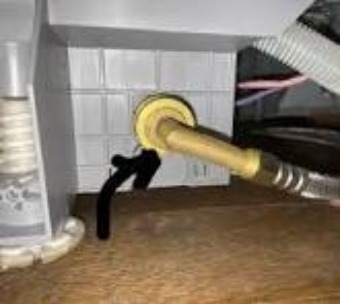
Water under the dishwasher but not at the front? Look underneath. The supply line (the braided hose bringing fresh water in) and the drain hose (the corrugated tube taking dirty water out) are the next most common culprits.
These leaks are dangerous because they can run for hours without you noticing — especially if the dishwasher is on the second floor. A slow leak from a supply line can dump 10 gallons in a single long cycle.
How to check the supply line
Turn off the water supply valve under the sink. Disconnect the dishwasher from power (flip the breaker or unplug it). Pull the dishwasher out — it sits on adjustable feet and slides forward. Put towels underneath.
Look at the braided steel hose connecting the dishwasher to the shutoff valve. If you see any corrosion, bulging, or wet spots, replace it immediately. A Danco 3/8-inch braided stainless steel supply line costs $12 at Home Depot. Do not reuse old hoses — they fail without warning.
How to check the drain hose
The drain hose connects the dishwasher to the garbage disposal or sink drain. It’s usually black corrugated plastic. Over time, the rubber grommet at the disposal end shrinks and leaks. Or the hose itself develops a pinhole from rubbing against the cabinet.
Run a cycle while the dishwasher is pulled out. Watch the drain hose for drips. If you see any, replace the hose ($8–$15) and the disposal grommet ($5). On KitchenAid KDTM354ESS models, the drain hose has a built-in check valve — replace the entire assembly, not just the hose.
My opinion: If your dishwasher is over 7 years old and you’re replacing the supply line, replace the drain hose at the same time. They cost almost nothing, and a second leak two months later will make you furious.
3. The One That Tricks Everyone: Overfilling or Foam
Your dishwasher is leaking, but nothing is broken. I’ve seen this more times than I can count.
Two things cause it: using the wrong detergent, or a stuck float switch.
Wrong detergent = foam = leak
Dishwashers are designed for low-sudsing detergents. If you use regular dish soap, hand soap, or laundry detergent, you get foam. Lots of it. That foam pushes past the door gasket and onto your floor.
I once used a “natural” dishwashing tablet that turned out to be a dishwasher cleaner tablet. The entire kitchen was ankle-deep in suds. The fix? Stop the cycle, scoop out foam, run a rinse cycle with a cup of white vinegar to break down the suds.
Prevention: Stick to known brands — Cascade Platinum, Finish Quantum, or Seventh Generation Free & Clear (the actual dishwasher version, not the hand soap). Never use liquid dish soap in a dishwasher.
Stuck float switch
The float switch sits in a little cup at the bottom of the dishwasher tub. It tells the control board when the water level is high enough. If it gets stuck in the “down” position, the dishwasher fills continuously — and eventually overflows.
Find the float. It’s a plastic dome or cylinder, usually in the front corner. Push it up and down with your finger. It should move freely and make a clicking sound. If it’s stuck, clean around it with a toothbrush. If the click is missing, the switch is dead — replace it ($10–$20).
4. The Hidden One: Tub or Pump Gasket Leaks
If you’ve checked everything above and still have water, the problem is inside the dishwasher chassis. Two specific parts fail regularly: the tub gasket and the pump seal.
Tub gasket
The dishwasher tub is actually two pieces of plastic or stainless steel welded together. On many GE and Frigidaire models, there’s a rubber gasket between the two halves. That gasket can fail, causing a slow leak during the fill cycle.
You’ll see water dripping from the bottom of the dishwasher, but the supply line and drain hose will be dry. The fix is replacing the tub gasket — a 2-hour job that requires removing the outer panels. Not a beginner repair. Expect to pay $150–$250 for a service call.
Pump seal
The pump seal is a rubber ring around the shaft of the circulation pump. When it wears out, water drips down the pump housing and out the bottom of the machine. On Maytag MDB4949SKZ and Whirlpool WDT730PAHZ models, this is a known failure point around the 5-year mark.
Signs: water on the floor during the wash cycle but not during the drain cycle. The pump itself is often fine — just the seal needs replacing. A pump seal kit costs $15–$30. The labor is the expensive part (1–2 hours).
When to walk away: If the pump housing is cracked (common on older Samsung models), replace the entire pump assembly or the dishwasher. A pump assembly costs $150–$250. On a 7+ year-old dishwasher, that’s usually the tipping point into replacement territory.
5. The Installation Mistake: Improper Drain Loop or Leveling
Two installation errors cause leaks that look exactly like a broken machine. Both are free to fix.
Missing high drain loop
The drain hose must loop up as high as possible under the counter before dropping down to the disposal. This “high loop” prevents dirty water from siphoning back into the dishwasher. If the loop is too low, water can leak out of the air gap or the hose connection.
Open the cabinet under the sink. Look at the drain hose. It should be secured as high as possible — ideally touching the underside of the countertop. If it’s drooping, zip-tie it up. That’s it. No parts needed.
Dishwasher not level
An unlevel dishwasher can leak from the door even with a perfect gasket. Water pools in the low corner and seeps out.
Put a level on the top edge of the door. Adjust the front feet by turning them — most models use a screwdriver or wrench on the front legs. Aim for perfectly level side-to-side and a very slight tilt backward (the front should be 1/8 inch higher than the back). That tilt keeps water in the tub.
On Bosch dishwashers, the rear feet are adjusted from the front with a long screwdriver. On LG and Samsung, you need to remove the lower access panel. Check your manual.
6. When to Call a Pro (and When to Buy a New Dishwasher)
Not every leak is a DIY fix. Here’s my rule of thumb.
Call a pro if:
- You’ve checked the gasket, hoses, and float and still have a leak.
- Water is coming from the bottom center of the machine (tub or pump leak).
- You see signs of electrical damage — sparks, burning smell, or a tripped breaker.
- The leak is on a second floor and water is dripping through the ceiling below. Shut off the water immediately and call a plumber.
Buy a new dishwasher if:
- The repair estimate exceeds 50% of the cost of a new machine.
- The dishwasher is over 10 years old. Energy use alone may justify replacement.
- The tub is cracked. That’s a structural failure. Replacement is the only option.
- You own a Frigidaire Gallery or LG model from 2015–2018 with a known control board failure. The board costs $200+. A new GE Profile PDT715SYNFS runs about $750 and is significantly quieter (44 dBA vs. your current 52 dBA).
One more thing: if the leak damaged your subfloor or cabinets, factor that into the decision. A $200 repair on a $400 dishwasher doesn’t make sense if the floor is already rotting.
7. Quick Diagnosis Flowchart (Your Next 10 Minutes)
You don’t need to read this whole article again. Here’s the compressed version — do these checks in order.
- Where’s the water? Front of the door → go to step 2. Under the machine → skip to step 3.
- Front leak: Check door gasket for cracks or flattening. Check door latch for looseness. If both are fine, level the dishwasher.
- Under-machine leak: Pull dishwasher out. Check supply line for drips. Check drain hose for drips. If both are dry, run a cycle and watch the bottom — if water appears mid-cycle, it’s the pump seal or tub gasket.
- Foam or overflow: Did you use the wrong detergent? Check the float switch. If the float is stuck, clean it. If it clicks freely but water still overflows, the float switch is dead.
- Still leaking after all this? Call a repair service. Ask for a diagnostic-only visit ($50–$100). Get a written estimate before approving any work.
That cold floor at 7 AM? In my case, it was a cracked drain hose — a $9 fix and 15 minutes of work. I wish I’d known to check the hoses first instead of assuming the worst. Start with the cheap, easy checks. Nine times out of ten, that’s all it is.
