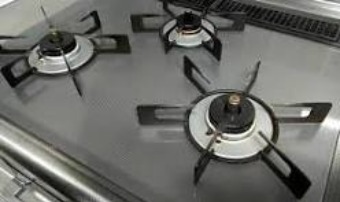
Most people assume a broken range means buying a new one. That’s the wrong starting point.
A burner that won’t light. An oven running 50 degrees cold. A control panel gone dark. These feel catastrophic. They’re often not. The real question isn’t whether to panic — it’s whether the repair costs less than half of what a replacement would run. That calculation, not the symptom, drives the decision.
The 50% Rule: Your First Filter for Every Range Repair
Appliance technicians have applied this rule for decades: if the repair costs more than 50% of the current replacement price, buy new. Under 50%, fix it.
The math is simple. A Whirlpool WFE550S0HZ electric range retails for around $750. A $200 repair? Do it without hesitation. A control board replacement that runs $450 installed? Walk into Best Buy instead.
Age complicates the calculation. A range under 8 years old with a single failing part is almost always worth repairing. One that’s 14 years old with multiple symptoms calls for a lower threshold — around 30% — because you’re not just fixing today’s problem, you’re betting on a machine that may fail again in six months.
| Range Brand & Model | Avg. Retail Price | 50% Repair Threshold | Avg. Lifespan |
|---|---|---|---|
| GE JGB735 (gas) | $850 | $425 | 15–18 years |
| Whirlpool WFE550S0HZ (electric) | $750 | $375 | 13–17 years |
| Samsung NX60T8311SS (gas) | $1,100 | $550 | 12–15 years |
| LG LRGL5825F (gas) | $1,300 | $650 | 12–16 years |
| Bosch HGI8054UC (gas) | $2,000 | $1,000 | 15–20 years |
| Frigidaire GCRE3060AF (electric) | $700 | $350 | 12–15 years |
How Brand Affects Parts Availability
GE and Whirlpool have the best parts ecosystems in the US market. PartSelect and RepairClinic ship their components within 2–3 days, and local appliance parts stores typically carry stock for both brands.
Samsung and LG are harder. Parts for models made before 2026 can take 1–2 weeks to arrive, and some components are only available through the manufacturer at a steep markup. If your Samsung NX60T8311SS needs a proprietary control board, expect to pay 40–60% more than you would for a comparable GE equivalent. LG has improved its parts distribution since 2026, but the gap versus domestic brands remains real.
Bosch is the most expensive to repair — by a significant margin — but their machines fail less often. If you own a Bosch HGI8054UC and it needs work, the 50% math almost always still favors repair, given what you paid upfront.
The One Exception to the 50% Rule
Safety-related failures don’t follow economic math. A cracked gas valve seat, an igniter causing incomplete combustion, or an electrical fault tripping your breaker — these get fixed regardless of cost, or you stop using the range entirely. The 50% rule is for convenience failures. Hazards operate on different logic.
Range Problems You Can Fix Yourself for Under $50
Not every broken range needs a $150/hour technician. Some of the most common failures are straightforward DIY repairs. Parts are cheap, the job takes under an hour, and there are model-specific videos for virtually every repair on YouTube.
Here’s what’s genuinely fixable without calling anyone:
- Gas burner won’t ignite — Start by cleaning the burner cap. Food debris clogs igniter ports constantly, and this fix costs nothing. If cleaning doesn’t work, a replacement spark igniter runs $15–35 on PartSelect and fits most GE, Whirlpool, and Frigidaire gas models.
- Oven runs hot or cold — Almost always a faulty oven temperature sensor (RTD probe). The sensor costs $20–50. Replacement involves two screws and a wire connector — swap it out and recalibrate through the control panel settings.
- Electric coil burner not heating — Swap coils between sockets to isolate the failure. If the coil heats normally in a different socket, your element is fine — the socket block is the issue. If the coil is dead everywhere, replace the element ($15–30 for most Frigidaire and GE models).
- Oven door seal leaking heat — A worn door gasket lengthens preheat times and throws off baking results. Universal replacement gaskets clip into the door channel on most brands and cost $15–40. No tools required.
- Oven light burned out — A $5–8 appliance bulb. Most are 40W incandescent or 15W halogen. Check your model manual for the exact spec. Ninety-second fix.
- Surface burner switch stuck or intermittent (electric) — On electric ranges, a failed burner switch is a common single-point failure. A replacement runs $20–45. Unplug the range, pull the knob, swap the switch.
Where to Find the Right Parts
Your model number is stamped on a label inside the oven door frame on virtually every GE, Whirlpool, Samsung, LG, and Frigidaire range made in the last 20 years. Type that number into PartSelect.com or RepairClinic.com. Both sites show exploded parts diagrams, confirm compatibility, and include installation guides filmed on your exact model.
Avoid Amazon for appliance parts unless you can verify the seller is OEM. Third-party igniters and heating elements are inconsistent. A $12 Amazon igniter that fails in four months costs more long-term than the $32 OEM part would have from the start.
When a Simple Fix Turns Into Something Else
If you’ve replaced the temperature sensor and the oven still reads wrong, the control board is likely at fault — not the sensor. If the gas burner still won’t light after a new igniter, check the igniter module or the spark switch. One failed component can mask another. Don’t keep throwing parts at an undiagnosed problem. If two targeted replacements haven’t resolved it, get a technician to diagnose before you spend more.
When Range Repair Is Just Not Worth It
Stop here if any of these apply: your range is over 15 years old, you’ve had two repairs in the past 18 months, or you smell gas and can’t identify the source. The first is retirement math — even a cheap repair buys you diminishing returns on an aging machine. The second is a pattern that signals systemic failure, not isolated bad luck. The third is not a repair situation at all. Shut off the gas supply valve, open windows, leave the house, and call your gas utility immediately. Not an appliance tech. Your utility.
The Specific Case Against Repairing Certain Control Boards
If you own a Samsung or LG range and the control board has failed, think carefully before authorizing the repair. Replacement boards for Samsung NX-series and LG LRGL-series ranges run $200–400 in parts, plus $150–200 in labor. These boards have a documented failure history — you may be spending $400–600 for a fix that lasts two years before the next board goes. At that price, the Whirlpool WEG745H0FS (gas, around $1,050) or GE JCGBS66SEKSS (gas, around $800) are better long-term calls.
Multi-Symptom Failure Is a Clear Exit Signal
One failing component is a repair situation. Three failing components on a 12-year-old range is a machine signaling it’s done. A burner that won’t light, an oven that heats unevenly, and a control panel that’s intermittent — that’s not bad luck stacking up. That’s age. Fix one problem and the next surfaces in six months. Recognize the pattern early.
What Professional Range Repairs Actually Cost in 2026
Service calls start at $75–150 before anyone touches your appliance. That’s just the technician showing up and diagnosing the problem. Labor typically runs $100–175 per hour after that. Parts get marked up 20–50% above what you’d pay buying them directly from PartSelect or the manufacturer.
A repair taking 90 minutes and using a $60 part will land at $250–380 when everything is invoiced. That’s the real baseline to work from when running the 50% calculation.
Professional Repair Cost Breakdown by Problem Type
| Repair Type | DIY Cost (parts only) | Pro Cost (parts + labor) | DIY Difficulty |
|---|---|---|---|
| Gas igniter replacement | $20–40 | $150–260 | Easy |
| Oven temperature sensor | $25–55 | $120–220 | Easy |
| Bake/broil element (electric) | $30–80 | $150–300 | Easy–Medium |
| Control board replacement | $150–400 (parts only) | $350–650 | Medium–Hard |
| Gas valve replacement | Not recommended DIY | $300–520 | Pro only |
| Surface burner switch (electric) | $20–50 | $150–250 | Easy |
| Door hinge or gasket | $15–60 | $100–200 | Easy |
How to Find a Competent Repair Technician
Don’t use a general handyman for range repairs. Use a certified appliance technician — NASTeC-certified or affiliated with the Professional Service Association. They carry brand-specific parts, complete jobs in one visit, and won’t misdiagnose a $40 igniter problem as a $400 control board replacement.
Sears Home Services and A&E Factory Service are the two largest national networks — convenient, usually bookable within a week. Local independent shops typically charge 15–25% less for the same work and are often faster. Either way: get a written estimate before work begins. Any shop that won’t commit to a quote before starting isn’t worth your time.
If your range is under one year old, skip independent shops entirely. Call the manufacturer directly. GE, Whirlpool, LG, and Samsung all dispatch warranty technicians with OEM parts at no cost. GE’s customer service line is often faster than going through the retailer where you bought it.
Are Extended Warranties Worth Buying for a Range?
For ranges in the $800–1,500 tier, yes. Best Buy’s Geek Squad Protection runs $150–200 for five years of parts and labor coverage. Home Depot’s Protection Plan prices similarly. One control board replacement — the most common mid-range failure — typically runs $350–600 as a covered repair. A single claim pays for the entire plan. For budget ranges under $600, skip it. At that price point, the gap between repair and replacement narrows enough that the warranty math doesn’t hold.
Electric vs. Gas Range Repairs: The Rules Are Different
Are Gas Ranges More Expensive to Repair Than Electric?
Generally, no. Gas ranges have fewer electronic components, which means fewer control board failures. The most common gas range repair — igniter replacement — runs $150–260 professionally and under $40 DIY. Electric ranges fail more frequently at the control board and heating element level, which pushes their average repair costs higher over a 10-year ownership window. Electric is more convenient to install but slightly more expensive to maintain.
Which Repairs Are Safe to DIY on a Gas Range?
Igniters, burner caps, oven temperature sensors, door gaskets, and light bulbs are all safe DIY territory on a gas range. Anything involving the gas valve, the supply line connection, or the pressure regulator is not. No exceptions. A licensed technician handles gas-line work. An incomplete seal or improper fitting isn’t just a failed repair — it’s a carbon monoxide or fire hazard. The $150 labor cost is not the part of this equation to optimize away.
Which Range Brand Has the Best Long-Term Reliability?
Whirlpool and GE hold the strongest reliability records among ranges under $1,000. Based on service call frequency tracked across appliance repair networks, both brands average fewer repairs per unit over 10 years than Samsung or LG at the same price point. Bosch leads overall reliability across all tiers, but its parts cost and longer repair lead times only make sense if you’re buying at $1,500 or above.
For most households shopping between $700 and $1,200, the GE JGB735 (gas, $850) and Whirlpool WFE550S0HZ (electric, $750) are the most repair-friendly options available. Parts are stocked everywhere, technicians know them cold, and the DIY repair documentation is extensive.
A 10-year-old GE gas range with a failed igniter is worth fixing — full stop. A 10-year-old Samsung with a dead control board and a second symptom developing is not. Buy the GE, repair the GE, and keep it for another decade.
